Commercial Waste Abbots Langley: Recycling and Sustainability
 Commercial Waste Abbots Langley is committed to creating an eco-friendly waste disposal area and a genuinely sustainable rubbish area for businesses across the town. Our approach to managing commercial waste in Abbots Langley focuses on clear segregation, diversion from landfill, and practical reuse partnerships that help local companies meet regulatory and environmental goals. This page outlines targets, local transfer stations, charity links, and low-carbon fleet plans that underpin our sustainability programme.
Abbots Langley commercial waste services work within the boroughs' established approach to waste separation: a multi-bin system that typically separates paper and card, mixed recycling, glass and food/organic waste. By aligning collections with the borough's separation rules we make it easier for businesses to improve recycling rates while keeping costs predictable. Our systems are tailored to commercial customers, from shops and offices to light industry.
 To drive continuous improvement we have adopted an ambitious recycling percentage target. The goal for local commercial waste collections is a 65% recycling and reuse rate by 2030, rising in line with national expectations thereafter. Achieving this requires business engagement, efficient sorting at source and collaboration with local material recovery facilities and transfer stations that process commercial waste streams.
Local transfer stations play a central role in turning separated waste into reusable materials rather than landfill. Materials collected from Abbots Langley businesses are delivered to regional transfer stations and material recovery facilities where glass, plastics, paper and metals are sorted and baled for recycling. Where organics are collected they are sent to anaerobic digestion plants to produce renewable energy and compost, supporting circular economy principles.
Partnerships with charities are a core part of our sustainable rubbish area strategy. Instead of consigning reusable items to landfill, we connect commercial clients with charities and social enterprises that accept:
- office furniture and fixtures
- working IT equipment and peripherals
- surplus stock and packaging materials
These relationships extend the life of products, support local community needs and count toward the recycling percentage target by capturing items for reuse. Donations are facilitated through scheduled collections or drop-off at agreed locations.
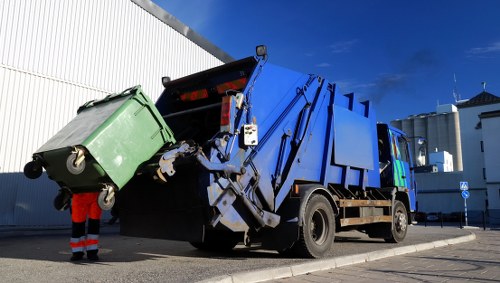
 Fleet decarbonisation is a practical measure for reducing the carbon footprint of commercial waste in Abbots Langley. Our transition plan includes the gradual introduction of low-carbon vans and electric vehicles for short-range collections, alongside route optimisation software to cut mileage. Low-emission vehicles help deliver the eco-friendly waste disposal area promise while supporting local air quality objectives.
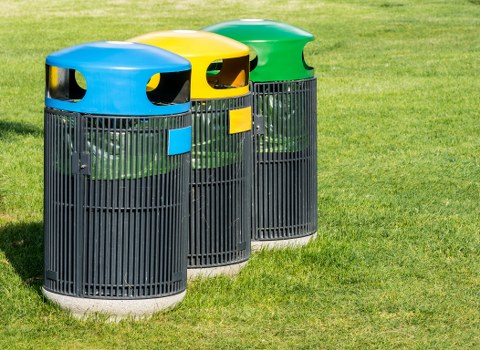
A focus on segregation at source is crucial for meeting targets. Businesses are encouraged to adopt simple, effective segregation systems such as dedicated bins for paper and card, mixed recycling, glass, food waste and general residual waste. This mirrors the boroughs' approach to waste separation and reduces contamination at transfer stations, improving the yield of recyclable materials.
Sustainable services for commercial customers include:
- on-site waste audits to identify improvement opportunities
- scheduled bulk collections for cardboard and palletised materials
- secure reuse channels for furniture and electronics through charity partners
- food waste collection and composting options for catering businesses
Each option supports a sustainable rubbish area and contributes measurable gains toward the recycling target.
Communal and shared waste spaces within business parks can be transformed into monitored eco-friendly waste disposal areas with signage and dedicated containers. These spaces reduce illegal dumping, improve recycling quality and make it easier for multiple occupiers to comply with Abbots Langley commercial waste requirements. Simple behavioural nudges, such as labeled bins and training, produce significant results.
 Transparency and reporting help businesses track progress toward the recycling percentage target. Monthly or quarterly management reports show tonnages diverted to recycling, material types recovered and carbon savings from low-carbon collections. These reports can be used for internal sustainability reporting or to support regulatory compliance and sustainability accreditations.
We also support circular procurement practices that prioritise reusable, repairable and recyclable products. By choosing materials with lower embodied carbon and higher recyclability, businesses further reduce the demand on landfill and strengthen the local circular economy. Collaboration with procurement teams helps embed sustainability into purchasing decisions for long-term impact.
 In summary, an effective strategy for commercial waste in Abbots Langley combines clear segregation, ambitious targets, strong charity partnerships, efficient transfer station networks and investment in low-carbon vans. Whether you manage a small shop or a larger commercial estate, creating a sustainable rubbish area and an eco-friendly waste disposal area is achievable with coordinated action, measurement and the right partners. Together we can meet the 65% recycling target and build a resilient, low-carbon future for Abbots Langley.
Next steps and ongoing commitments
Continuous improvement for Abbots Langley commercial waste
Ongoing commitments include regular reviews of recycling performance, expanding charity reuse schemes, replacing older vehicles with low-emission vans, and working with local transfer stations to improve processing capacity. Strong coordination between businesses, waste operators and the borough ensures that the eco objectives for the area remain practical and deliverable.
